|

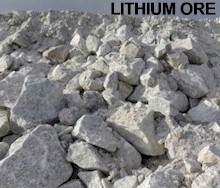
What Are Lithium Ore
Minerals or Lithium Concentrates?
High-grade lithium has
been discovered in Nigeria according to the Director-General,
Nigerian Geological Survey Agency, Dr Abdulrazaq Garba. Lithium is a
highly reactive metal that is used for making energy-dense
rechargeable batteries for electronics, such as laptops, cell
phones, electric vehicles, and grid storage. “High grade in the
sense that the standard worldwide for even exploration and mining
starts from 0.4 per cent lithium oxide but when we started
exploration and mining, we saw one per cent up to 13 per cent
lithium oxide content”, said Garba. “Another advantage of Nigerian
lithium is that it is hard rock lithium and that is what investors
are looking out for worldwide.
We even had discussions with some
private companies with mining licences in Nigeria and they conducted
tests on the lithium and we also collaborated with Canada on that
too.” Garba said that a track of mineralisation almost two to 10km
was discovered close to Abuja, adding that resource evaluation was
conducted on the area and anomolous gold, lead and silver were
discovered with Tungsten, an addictive for steel production.
Lithium Ore minerals are rocks containing
Lithium, which is a chemical element with the symbol Li and atomic number 3
that is not found as a free element in nature.
-
The Lithium concentrate is the pure
Lithium extract from the rock (ore) itself.
-
They’re found mostly in the Northern parts
of Nigeria.
-
Lithium Ore mining or processing can
create a great source of employment.
-
Lithium has the formula Li+. Lithium is a
chemical element with symbol Li and atomic number 3.
-
Lithium is a silvery-white, lustrous
metal.
-
The most common Lithium Ore in Nigeria are
spodumene, petalite, amblygonite, and lepidolite.
-
Lithium ore minerals in Nigeria can
exported as spodumene, petalite, amblygonite, and lepidolite.
-
Lithium niobate is used to make cell phone
batteries.
-
Lithium is used to absorb neutrons in
nuclear fusion.
-
Lithium can be combined with other metals
(usually aluminum, cadmium, copper or manganese) to make airplane parts.
-
Lithium hydroxide and lithium peroxide are
used to purify air in submarines and on spacecraft. Lithium peroxide is
fantastic as it reacts with carbon dioxide to produce oxygen.
-
One of the most important uses of lithium
is in the treatment of bipolar disorder and depression. Salts of lithium
(such as lithium carbonate and lithium citrate) are mood stabilizers.
-
Lithium can be used in focal lenses for
telescopes and common spectacles.
-
Lithium is used in manufacturing
batteries.
-
The profit margins on the sale of Lithium
Ore or Lithium Concentrates to international buyers can be anywhere from
15% to 110% depending on if you’re the miner or are purchasing from the
mines.
-
As a broker, one can venture into this
business with $0.
-
China is the top importer of Lithium Ore
in the world.
-
There are Lithium deposits in Nasarawa,
Zamfara, Kaduna, Kogi, Niger, Kwara, Plateau, Ekiti, Cross River, Oyo
and a few other states in Nigeria.
-
Lithium Ore minerals and Lithium
Concentrates prices are calculated in metric tonnes.
-
Lithium rarely occurs alone in nature.
Discovery of
High-grade lithium in Nigeria
High-grade
lithium has been discovered in Nigeria
in 2019. The Geological Agency described
the lithium as high grade because what’s
been found has between 1% - 13% oxide
content. Normally exploration begins at
levels as low as 0.4%. Grade (in %) is a
measure of concentration of the lithium
in the minerals and or rocks that
contains it. Therefore, the higher the
grade the more the economic viability.
Higher grades are very rare for metals
like lithium.
Worldwide, these three countries, Australia
(40,000 tonnes), Chile (20,600 tonnes) and China (14,000 tonnes) mine about
86% of the world’s lithium. Others are Argentina (6,200 tonnes), Brazil
(1,900 tonnes), Zimbabwe (1,200 tonnes), USA (900 tonnes) and Portugal (900
tonnes), according to 2020 data. The largest importers of lithium are South
Korea, China, Japan, US and Belgium. Lithium price was averagely US$2,000
per metric ton in 2002 rising to US$18,000 in 2018. |
|
|
 List
of abundant Natural Resources in the
North
-
Abuja:
Gold, Cassiterite, Dolomite,
Clay, Lead/Zinc, Tantalite, Silver and
Marble;
-
Adamawa: Magnesite and Kaolin,
Gypsum and Bentonite;
-
Bauchi: Gold, Gypsum, Wolfram, Coal, Limestone, Lignite, Iron Ore
and Clay, Cassiterite (Tin Ore),
Gemstones, Barite, Columbite;
-
Benue: Marble and Salt, Limestone,
Lead/Zinc, Iron Ore, Gypsum, Barite,
Clay, Coal and Gemstone;
-
Borno: Clay, Bentonite, Diatomite,
Gypsum, Hydrocarbon, Kaolin and
Limestone;
-
Gombe: Gypsum and Gemstone;
-
Jigawa: Butyl;
-
Kaduna:
Gold, Lithium Ore, Amethyst,
Clay, Felspar, Gemstone, Graphite,
Kaolin, Hyanite, Mica, Rock Crystal,
Ruby, Sapphire, Tentalime, Kaolin,
Topaz, Talc, Tourmaline and
Asbestos;
-
Kano: Tantalite, Lead/Zinc, Glass
Sand, Gemstone, Copper and
Gassiterite;
-
Kastina: Marble, Salt and Kaolin;
-
Kebbi: Gold;
-
Kogi:
Gold, Lithium Ore, Dolomite,
Cole, Felspar, Gypsum, Iron Ore,
Felspar, Columbite, Talc and
Cassiterite;
-
Kwara:
Gold, Lithium Ore, Tantalite,
Mica, Marble, Iron Ore, Feldspar,
Columbite and Cassiterite;
-
Nassarawa: Lithium Ore, Quartz,
Quartz, Tourmaline, Tantalite, Talc,
Sapphire, Salt, Mica, Limestone,
Iron Ore, Galena, Marble and
Feldspar;
-
Niger:
Gold, Lithium Ore, Lead/Zinc,
Iron Ore, and Talc;
-
Plateau:
Lithium Ore,
Wolfram And Tin, Tantalite
and Columbite, Salt, Molybdenum,
Marble, Lead/Zinc, Kaolin, Iron Ore,
Granite, Gemstone, Fluoride,
Emerald, Coal, Clay, Cassiterite,
Bismuth, Bismuth, Bauxite And
Barite;
-
Sokoto:
Gold, Salt and Silica, Sand,
Potash, Phosphate, Limestone,
Laterite, Kaolin, Gypsum, Granite,
Flakes, Kaolin and Clay;
-
Taraba: Kaolin, Barite and
Lead/Zinc;
-
Yobe: Soda Ash;
-
Zamfara: Gold, Lithium Ore, Cotton,
and Coal.
What is lithium and
why is it important?
Lithium
Ore is a
metallic mineral in very high demand by
manufacturing industries. Seven years
ago the bulk of demand for lithium was
split between ceramics and glasses (35%)
and greases, metallurgical powders,
polymers, and other industrial uses
(over 35%). Less than 30% was for
batteries. But by 2030, batteries are
expected to account for 95% of demand.
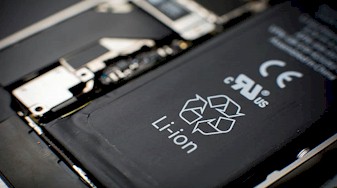
Lithium-ion
batteries are generally more expensive
but have better performance and are
becoming the preferred technology. The
different types are:
-
Lithium-cobalt oxide battery. It is
used in consumer electronics and is
finding application in electric
vehicles. It is relatively cheap.
-
Lithium-nickel-manganese-cobalt is a
newer, higher performing range of
battery chemistry. It is mainly
developed for the electronic vehicle
market but is finding a wider use
because of its increasing cost
effectiveness.
-
Lithium
iron phosphate, the safest
technology with relatively high
performance but relatively
expensive. It is very popular in
China but is likely to become
overtaken by
Lithium-nickel-manganese-cobalt over
the longer term; and
-
Lithium-nickel-cobalt-aluminium
oxide developed to reduce cobalt
consumption and is known as a solid
performer and of reasonable cost. It
is also becoming popular outside
China.
Uses of Lithium-Ore
and its Demand
Lithium-ion
batteries are used in mobile phones,
computers, electronics, energy storage
systems and electric vehicles. The
forecast is that they will dominate the
lithium market over the next decades.
However, there are many different types
of lithium-ion battery for different
applications.
Lithium and
most lithium minerals are mined along
with other high-value metallic minerals
such as tin, niobium-tantalum (columbite-tantalite)
and uranium (in pyrochlore).
Greenbushes
mine in Western Australia is the largest
hard-rock lithium mine in the world.
Tantalum is also mined there. In 2019,
the mine’s output capacity doubled to
1.34 million tonnes of lithium
concentrates annually after a second
processing plant was added. Global
lithium mine production hit a record
high of 100,000 tonnes in 2021, a 21%
increase over 2020 (82,500 tonnes). Due
to the growing interest in clean energy,
the demand for lithium has skyrocketed
as most countries draw plans to phase
out fossil fuel vehicles and switch to
zero emission electric vehicles. The
underlying demand for lithium is
expected to rise proportionately to the
production and sales of those vehicles.
Lithium production globally grew from
28,100 metric tons in 2010 to 86,000 in
2019. The challenge will be in supplying
the market with enough lithium. |









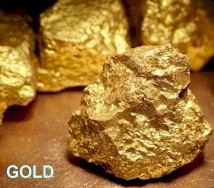 There are proven reserves of both
alluvial and primary gold in the schist belt of Nigeria, in
the southwestern part of the country, and in some states in
Northern Nigeria. Gold deposits in these states are mainly
alluvial. Therefore, private investors can stake concessions
on these primary deposits. Gold exploration is n