|
Building
trusting relationships among key players that spur the movement of
ideas into action in an agile manner for the Arewa region.
 AREWA STRATEGY and PLANNING
Promoting the development of a high quality multi-year plan that builds on
the economic strengths of the entire Arewa region.
States
Leadership within the Arewa region should come together to create and
adopt the Arewa Regional Economic Plan with emphasis on a balanced approach
to development and established targets for economic growth of the region.
The plan should build on current regional opportunities, collaboration and
innovation
AREWA STRATEGY-DOING
It is a new strategy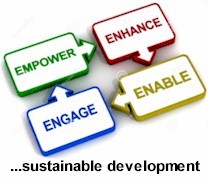 discipline specifically designed for open,
loosely-connected networks. Unlike strategic planning that was designed
primarily to guide strategic activity in hierarchical organizations,
Strategic-Doing is designed for situations in which nobody can tell anybody
else what to do. Collaboration is the only way to move forward. It therefore
teaches people how
to
form collaborations quickly, move them toward measurable outcomes and make
adjustments along the way.
In today’s world, collaboration is essential to
meet the complex challenges we face. Strategic-Doing enables leaders to
design and guide new networks that generate innovative solutions. It is a
new strategy discipline that is lean, agile and fast.
 How does Strategic Doing work?
Strategic-Doing works by
teaching simple skills
of strategic-collaboration. The skills are simple to understand,
but they take practice to master. We teach the skills primarily
through three to four hour strategy workshops.
 For organizations
and communities within a region that do not have a strategic
plan,
Strategic-Doing
can generate an initial plan in a matter of hours with an
intensively focused and custom workshop. The process quickly
forms new collaborations among workshop participants and moves
them into learning by doing.
As these collaborations form and participants learn from each
other,
Strategic-Doing advances quickly. Short, focused strategy
reviews take place regularly, usually every 30 days. With
Strategic-Doing, strategy becomes more like software
development. New versions of the strategy appear frequently as
participants learn what works.
What if we already have a strategic plan? Can Strategic Doing
help us?
For organizations and communities within a region that are stuck
with their strategic plan,
Strategic-Doing provides an agile
process to accelerate implementation. By producing rapid-fire
strategic action plans,
Strategic-Doing moves existing strategic
plans to new levels of performance. For instance, using applied
Strategic-Doing in a wide variety of contexts from the
development of new clusters and regional innovation ecosystems
to the launch of new workforce innovations and the regeneration
of inner-city neighbourhoods.
How do we get started?
You can learn about how other organizations, communities and
regions have used
Strategic-Doing. Or you can connect with
us directly, so we can start to explore your situation together.
Since all of our
Strategic-Doing work is customized to meet your
needs, we start all of our engagements with your situation and identify some concrete outcomes
that could help you.
Implement Programs that Build
on Regional Opportunities
Introducing innovative programs that complement and add value to
all States within the Arewa region’s industry and occupational
clusters.
Strengthen Arewa Regional Collaboration and Innovation
Networks
The mainstay of the ACRD Center of Excellence’s collaboration
work centers on its Strategic Doing initiative. This program
will focus on the use of States within the regional networks to
accelerate innovation, partnership and collaboration.
Strategic-Doing quickly develops sophisticated collaborations that help
advance open innovation across organizational and political
boundaries within the entire region. Strategic Doing
ignites the spark of regional innovation,
partnership and
collaboration enabling people in loosely-joined, open networks
to think and act strategically. In partnership with Small
Business Development Center’s across the World,
 this program
showcases the pivotal role of second-stage firms to employment
growth and prosperity and development growth strategies, with
the goal of making Arewa region an investment destination.
ICT is the convergence of communications, computing and
information technologies and has become the catalyst
that enhances development process of a nation...Read
On>>
|
|
|
 AREWA STRATEGIC DATA FOR DECISION - MAKERS
In today's knowledge
economy, the main source of value and competitive advantage is the human capital using knowledge,
innovation and creativity for development, including using ICT and Data to
unlock the region's
unique characteristics.
USING DATA FOR DECISION
MAKING - To keep Arewa competitive both in Nigeria and in the global
marketplace, it is critical that Arewa Leaders understand the economic
dynamics of their region and how these drivers affect workforce issues.
States within the
Arewa region must have continuous access to data and decision
support to ensure proper planning that produces workers with the skills that
are relevant to the region’s businesses and
economic development. ACRD aspires to be the leading source of
regional workforce information and insight for the entire region by:
-
Helping
to
identify opportunities and trends in
high growth, emerging, and economically
critical industries and occupations;
-
Estimating continuously the gap between labour market
demand, available training, and existing
or future workers;
-
Helping
the
region to respond to workforce needs by
providing them quality and up-to date
information and training in partnership
with Universities/Skill Centers located in the region.
Regional
Growth Strategies for Local Governments
A regional growth strategy is a strategic-plan that directs long-term
and short-term economic planning for
the region. The growth strategies are designed to
promote human settlements that are socially,
economically
and environmentally sustainable
and that make efficient use of public
facilities, land and other resources to
support and enhance regional sustainability
and resilience. The development of a
regional growth strategy is a collaborative
and interactive process, which is initiated, prepared and enacted
by a regional local government, with the
involvement of local and State Government.

Purposes of
a Regional Growth Strategy
A regional growth strategy would work
toward, but not be limited by, the
following:
-
Avoiding
urban sprawl and ensuring that
development takes place where adequate
facilities exist or can be provided in a
timely, economic and efficient manner;
-
Developing
settlement patterns that ensures
transparency, fairness and that minimize
the risks associated with natural
hazards (proper town planning);
-
Moving
goods and people efficiently while
making effective use of transportation
and utility corridors;
-
Protecting
environmentally sensitive areas;
-
Maintaining the integrity of a secure
and productive resource base, including
agricultural and forest land reserves;
-
Economic
development that supports the unique
character of communities;
-
Reducing
and preventing air, land and water
pollution; and unauthorized settlement;
-
Supporting
adequate, affordable and appropriate
housing and business facilities;
-
Developing
adequate inventories of suitable land
and resources for future settlement or
expansion;
-
Protecting
the quality and quantity of groundwater
and surface water;
-
Preserving, creating and linking urban
and rural areas including parks and
recreation areas;
-
Planning
for energy supply and promoting
efficient use, conservation and
alternative forms of energy;
-
Engaging
in good stewardship of land, sites and
structures with cultural and religion
heritage values;
-
A regional
district may design a custom strategy
that fits local circumstances by adding
other matters that cross local
government boundaries and cannot be
addressed by one jurisdiction.
-
Engage the
citizens to avoid conflict through
buy-in of plans by stakeholders.
Easily create
your Strategic Plan in 9 simple steps. Just
add your data, everything else is already
done for you.
 This
Strategic Plan Template is an international
Bestseller created by ex-McKinsey, Deloitte
& BCG Strategy Consultants, better define &
execute your Strategy and quickly improve
your
Strategic Planning Capability. This
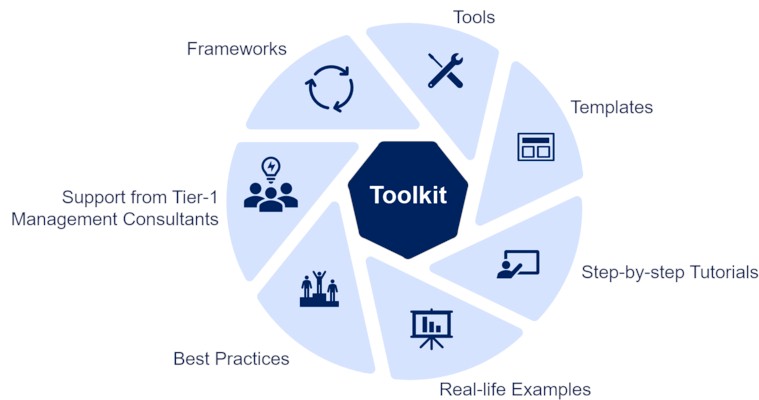
Toolkit includes frameworks, tools,
templates, tutorials, real-life examples and
best practices to help you:
-
Better
define & execute your strategic plan by
leveraging the ready-made strategic
plan, which includes sections such as
“market analysis”, “competitor
analysis”, “SWOT analysis”, “mission,
vision & strategic objectives”, “key
initiatives to reach the strategic
objectives” and “strategic roadmap”;
-
Build a
strategy map and balanced scorecard to
easily translate your strategy into
strategic objectives, key performance
indicators and targets;
-
Quickly
improve the strategic planning
capability and conduct a strategic
planning project following 8 simple key
steps such as “conduct kick-off
meeting”, “provide business insights”,
“define mission and vision”, “identify
key strategic objectives”, and “create a
successful reporting process” and
implement, track & manage progress with
visual dashboards.
|
 Preparing
& Adopting a Regional Growth
Strategy
Regional States may voluntarily
initiate a regional growth strategy
by resolution of the regional state
board. A state government may
approve, for instance the initiation
or enactment of a regional growth
strategy in the State. The process
for preparing a regional growth
strategy is also largely left up to
each state. Some states may
undertake extensive research and
assessment of a number of options,
while others may move through the
process more quickly. In all cases,
the preparation of a regional growth
strategy involves engagement with
all levels of government and the
public.
Building Consensus
The acceptance and the effective
implementation of a regional growth
strategy is dependent on buy-in to
the process, ongoing involvement and
commitment by all affected agencies.
There are two mechanisms to achieve
consensus and positive working
relationships through consultation
plans and intergovernmental advisory
committees.
Consultation Plans
The legislation requires that
the state board consult with
individuals, organizations and
authorities who they consider will
be affected by the strategy, and
adopt a consultation plan in this
regard. As part of developing a
consultation plan, the board must
consider the need for a separate
public hearing before the adoption
of a regional growth strategy.
Public hearings allow opportunities
for the public and other
stakeholders to provide input well
before a growth strategy comes to
the board for approval. Consultation
plans provide flexibility and
maintain the integrity of the
consultation process while
facilitating the more efficient
development of a regional growth
strategy.
Intergovernmental Advisory
Committees
Once a state has initiated a
regional growth strategy, an
intergovernmental advisory committee
is established. This committee
provides a forum for senior state
and local government staff and
representatives of other authorities
to advise the regional board on the
development of the regional growth
strategy and to help coordinate
actions, policies and programs as
they relate to the strategy.
Reaching Agreement
The regional growth strategy
interactive planning model
encourages dialogue to support the
building of consensus among local
governments on decision-making
related to growth in the region.
Given differing planning priorities
and values, disputes can emerge. The
growth strategy legislation
encourages the use of alternative
dispute resolution processes to
reach mutual agreement. The
commissioner responsible for local
government may appoint facilitators
to assist local governments to reach
agreement on the acceptance of
regional growth strategies. If local
governments are unable to reach
agreement, the commissioner will
direct the parties to either a
non-binding resolution process
(mediation) or a binding settlement
process.
Implementation Tools
Once a regional growth strategy
has been adopted, all subsequent
laws and all
works and services undertaken by the
regional district must be consistent
with the strategy.
Implementation Agreements
A State cannot implement a
regional growth strategy on its own
and requires the cooperation and
assistance of local governments and
other public organizations. Local
governments have the authority to
enter into implementation agreements
with other local governments, just
as state will enter into implementation
agreements with other states in the
region as well as other levels of
government and agencies to implement
the actions and policies of the
regional growth strategy.
Regional Context Statement
Local governments (LG) must
update their official community
plans within two years of the
adoption of the regional growth
strategy to include a regional
context statement. The regional
context statement sets out the
relationship between the regional
growth strategy and the official
community plan and how they will be
made compatible over time. The
statement is subject to acceptance
by the state to ensure the LG and
the region agree that the two
documents are compatible. Dispute
resolution processes are available
to resolve disagreements if they
arise.
Monitoring an Adopted Regional
Growth Strategy
Regional States must:
-
Establish a monitoring and
evaluation program
following the adoption of a
regional growth strategy;
-
Prepare an annual report for the
public at least once every two
years;
-
Consider whether the strategy
should be reviewed.
Minor
Amendments
States
may make minor amendments to a
regional growth strategy, but must
ensure that amendments that
substantially change the vision and
direction of the strategy are
accepted by other States and all
affected local governments. This
ensures that:
-
The vision of a regional growth
strategy is sustained;
-
Day-to-day technicalities can be
dealt with efficiently;
-
Substantive policy decisions can
be discussed and decided.
Regional Issues Assessments
A regional issues assessment is
a joint Community/LG government
review of the issues affecting local
governments in the area. In
consultation with the State
government agencies, other
organizations and the public,
consensus is reached on issues,
linkages and priorities. Possible
follow-up actions such as a regional
growth strategy,
inter-jurisdictional agreements,
joint community planning, local
government restructure or
infrastructure investment are
identified and agreed upon. |